Imagine this: you’re driving home on an icy Wisconsin night when your tires slip on a sharp turn. Your vehicle clips a curb, slides into a guardrail, or scrapes a parking garage pillar. No other cars are involved, nobody is injured, and your vehicle still seems drivable.
Relieved, you head home thinking you got lucky.
A few days later, however, a strange noise sends you to the mechanic. After a closer inspection, you’re hit with unexpected news: the accident caused significant damage to your suspension, frame, or steering system, resulting in a repair bill far higher than you expected.
So, do you need to report a single-vehicle accident in Wisconsin if you only discover the damage later?
The answer depends on the extent of the damage and what was struck during the crash. Even when no other drivers are involved, Wisconsin law may still require you to file an official accident report.
When Must a Single-Car Accident Be Reported in Wisconsin?
Many drivers assume reporting requirements only apply when multiple vehicles are involved. In reality, Wisconsin’s accident reporting laws can apply to a one-car accident as well.
A report is generally required if the accident results in:
- Injury or death to any person
- Significant damage to a vehicle or private property
- Damage to government-owned property such as guardrails, traffic signs, utility poles, or traffic signals
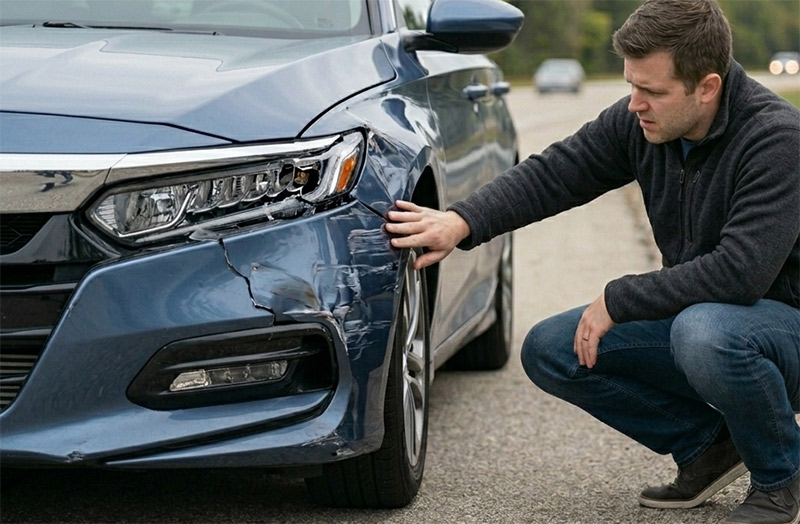
What appears to be a minor scrape or dent can quickly exceed reporting thresholds. Modern vehicles contain sensors, cameras, and complex structural components that often make repairs far more expensive than they initially appear.
The Legal Thresholds for Wisconsin Accident Reporting
According to Wisconsin Statute s. 346.70(1), any motor vehicle crash within the state must be reported immediately to law enforcement if it crosses specific financial or safety thresholds.
A report is completely mandatory if the incident results in:
- Any personal injury or death (this includes minor injuries that only require basic first aid).
- $1,000 or more in total property damage to any one person’s vehicle or property.
- $200 or more in damage to government-owned property (such as traffic lights, city trees, utility poles, or guardrails), excluding government vehicles.
Reality Check: what looks like a minor scrape can turn into a major repair bill. Modern vehicles contain sensors, cameras, and structural components hidden behind bumpers and body panels. Damage that appears insignificant at first can easily exceed Wisconsin’s reporting thresholds once a mechanic performs a thorough inspection.
What If You Discover Damage After the Accident?
This situation is more common than many drivers realize.
After a single-vehicle crash, damage may not become apparent until days later. Hidden frame damage, suspension problems, wheel alignment issues, or electronic sensor failures can dramatically increase repair costs.
If a mechanic later determines the damage exceeds Wisconsin’s reporting threshold ($1,000), you may still have an obligation to file a report, even if you did not contact law enforcement at the scene.
The sooner you act, the better positioned you’ll be to protect both your insurance claim and your legal rights.
How to File a Late Crash Report After a One-Car Accident
If you realize after the fact that your repair costs have crossed the legal limit and your accident should have been reported, you must personally file the paperwork.
- The Form: You will need to complete the online Wisconsin Driver Report of Crash (Form DT4002).
- The Deadline: Wisconsin state law mandates that drivers must forward a written report within 10 days of the accident (or 10 days from when you become aware that the reportable criteria were met).
- What You Need: To complete the filing with the Wisconsin Department of Transportation (WisDOT), gather the following information:
- Driver’s license information
- Vehicle Identification Number (VIN)
- Insurance information
- Photos of the vehicle and accident scene, if available
- Repair estimates or mechanic reports
Wisconsin drivers can submit the required crash report through the Wisconsin Department of Transportation when law enforcement did not investigate the accident at the scene.
What Happens If You Don’t Report a Reportable Accident?
Failing to report a reportable single-car accident can create several problems and have different consequences:
Insurance Issues
Insurance companies often scrutinize delayed claims. Without an official accident report, insurers may question when the damage occurred or whether it was actually caused by the accident.
Driver’s License Consequences
In some circumstances, failing to comply with Wisconsin’s accident reporting requirements can result in administrative penalties affecting your driving privileges. WisDOT has the legal authority to suspend your operating privileges if you knowingly fail to report an accident that met the reporting criteria.
Property Damage Liability or Hit-and-Run Charges
If your one-car accident damaged a guardrail, road sign, a neighbor’s mailbox, fence, or other property, failing to notify the appropriate party or leaving the scene without notifying the property owner or local police could create additional legal complications.
Protecting Yourself: What Should You Do After a Single-Vehicle Crash?
If you’ve been involved in a single-vehicle accident, consider taking the following steps:
- Photograph the accident scene and vehicle damage.
- Obtain a professional repair estimate as soon as possible-Don’t guess the repair cost. Take your car to a certified collision center immediately so you know exactly whether you’ve crossed the $1,000 threshold.
- Determine whether any public or private property was damaged.
- Notify your insurance company promptly.
- Consult a personal injury attorney if you have questions about reporting requirements or insurance coverage. If you are worried about the legal ramifications of a late report, or if your insurance company is refusing to cover delayed vehicle damage, speaking with an experienced car accident attorney can shield you from costly financial and driving penalties.
Don’t Assume a One-Car Accident Is Minor
Many drivers walk away from a single-vehicle crash believing the incident was too minor to worry about. Unfortunately, hidden vehicle damage, property damage, and reporting requirements can create complications long after the accident occurs.
If you’re unsure whether your accident should have been reported or if your insurance company is questioning your claim, speaking with an experienced Wisconsin car accident attorney can help you understand your options and protect your rights.
Schedule a Free Consultation
Questions about reporting a single-vehicle accident in Wisconsin? Our personal injury attorney can review your situation, explain your reporting obligations, and help you navigate any insurance or liability concerns.
Contact Bykhovsky Law today for a Free Consultation.